
The Design Sprint Ultimate Guide in 2026
“The design sprint ultimate guide in 2026”
Design sprints have transformed from a startup innovation hack into a fundamental strategic tool for organisations of all sizes. Originally developed by Jake Knapp at Google Ventures in 2010, the design sprint methodology has evolved significantly—particularly as we enter 2026, where artificial intelligence, remote collaboration, and enterprise adoption have reshaped how teams solve problems and validate ideas.
This comprehensive guide explores everything you need to know about design sprints in 2026, from foundational principles to cutting-edge AI integration, providing you with actionable insights to drive innovation in your organization.
What is a design sprint?
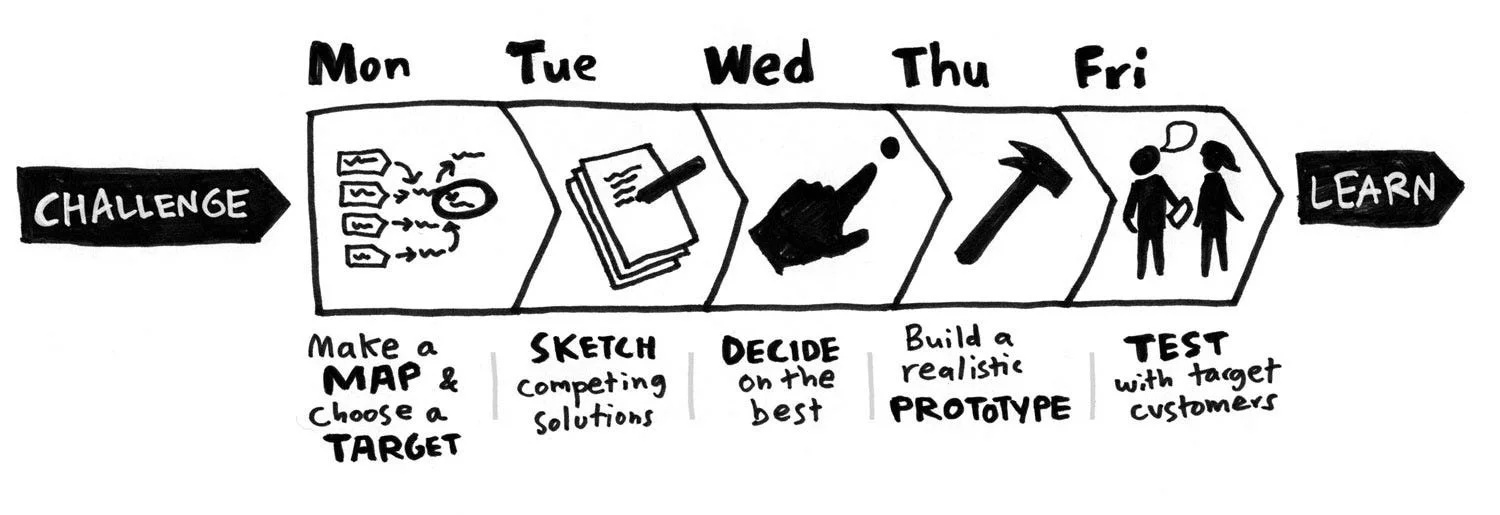
Design sprint phases: 5 day process
A design sprint is a time-constrained, structured process for solving complex problems through rapid prototyping and user testing. Think of it as fast-forwarding into the future—you can see how customers react to your ideas before investing months of development time and substantial resources.
The core promise is simple yet powerful: compress months of debate, design, and development into just 4-5 days, emerging with a tested prototype and validated insights.
Design Sprint 2.0: The 4-day evolution
Created through hundreds of sprint iterations, Design Sprint 2.0 maintains the same quality of outcomes while saving an entire day. Key modifications include:
Combined understanding and sketching: Day 1 incorporates both mapping and individual sketch work
Streamlined decision making: More efficient voting and decision processes on Day 2
Optimized schedule: Tighter time boxes and eliminated redundancies
Same quality, faster results: Teams still arrive at a tested solution, just more efficiently
Enterprise Design Sprint 3.0: Scaling for large organisations
As design sprints have moved from startups to enterprises, adaptations have become necessary. The stakes are higher, teams are larger, and decisions ripple across departments.
Problem framing: The critical upstream phase
Before running a sprint in an enterprise context, successful organizations now add a Problem Framing phase to:
Validate that the team is solving the right problem
Align stakeholders and decision-makers early
Ensure the challenge is strategically important and clearly defined
Root the sprint in both business goals and customer needs
Key differences in enterprise sprints
Stakeholder management: More people need to be informed and aligned, even if they're not in the sprint room.
Risk considerations: Enterprises can't afford to "fail fast" the same way startups can—the cost of failure includes lost credibility, departmental confusion, and delayed strategic progress.
Integration with agile: Design sprints work as an "upstream" activity before Agile delivery begins, validating ideas before they enter the backlog.
Extended refinement: Many enterprise teams extend the process by 1-2 weeks after the sprint to refine prototypes and ensure deliverables are ready for development.
AI-powered Design Sprints: The 2026 innovation
The integration of AI into design sprints represents the most significant evolution of the methodology in recent years. However, it's crucial to understand the distinction between two approaches:
AI-powered Design Sprints
AI serves as a tool to augment the traditional design sprint process—like having a Swiss Army knife that makes everything smarter and faster.
Where AI Excels:
Pre-Sprint preparation:
Write the design sprint brief using ChatGPT to structure goals, user context, and success metrics
Generate user interview scripts
Draft research hypotheses and problem statements
Create personas and journey maps from existing customer data
During the sprint:
Fill in missing perspectives during Lightning Talks (market trends, legal considerations, user insights)
Synthesize long-form customer interviews into themes and highlights
Generate variations on sketched concepts
Assist with prototyping by creating copy, visuals, or code snippets
Post-Sprint Analysis:
Organize and analyze user testing notes
Identify patterns across interviews
Generate comprehensive sprint reports
AI Design Sprints
These sprints focus on creating AI-driven solutions where AI isn't just a feature, it's the main functionality.
Key Characteristics:
Expert involvement from data scientists and AI engineers
Deep understanding of AI capabilities and limitations
Focus on data strategy and model feasibility
Prototyping of AI-powered experiences
Validation of whether AI is the right solution to the problem
The AI sprint trap
Some teams are experimenting with fully AI-driven sprints—where ChatGPT and one facilitator run everything, including testing with synthetic personas. While efficient, this approach carries significant risks:
The illusion of validation: Perfectly convincing prototypes and clean feedback can trigger investments based on synthetic insights that don't match reality
Innovation sameness: If everyone relies on AI to generate solutions, the market becomes flooded with similar, generic answers
Disconnection from real needs: Solutions may be well-designed and well-reasoned but entirely disconnected from what users actually need
Best Practice: Use AI to sharpen thinking and speed up work, but keep your team in the loop and keep reality in the room. Always validate with real users.
Best practices for successful design sprints in 2026
Team composition
Optimal Size: 4-7 members with diverse skills
Facilitator (sprint master)
Designer
Developer (front-end and/or back-end)
Product Owner
Domain experts
Decision-maker (the "Decider" with final say)
For AI Sprints: Include data scientists, AI engineers, and technical specialists.
Preparation is critical
Weeks Before:
Select a big, important challenge worth five days of focused work
Recruit the right team members
Secure a dedicated space (physical or virtual)
Clear everyone's calendar completely
Recruit test users (or assign someone to do this on Day 1)
Materials Needed:
Whiteboards (physical or digital like Miro)
Markers and Post-it notes
Dot stickers for voting
Prototyping tools (Figma, Keynote, or specialized tools)
Timer to keep activities on track
Remote sprint considerations
Remote design sprints are now standard practice and can be just as effective as in-person sessions with the right approach:
Use collaborative tools: Miro, MURAL, or FigJam for whiteboarding
Schedule intentional breaks: Energy management is even more crucial remotely
Over-communicate: What's implicit in person needs to be explicit online
Test technology beforehand: Conduct practice sessions with digital workspace tools
Create breakout moments: Use virtual breakout rooms for parallel work
Facilitation mastery
The facilitator role has become increasingly recognized as critical to sprint success:
Time Management: Keep activities moving without feeling rushed
Psychological Safety: Create an environment where all ideas are welcome
Energy Management: Balance intense work with intentional rest (the "Tabata method" of product design)
Conflict Resolution: Use structured decision-making to handle disagreements
Focus Maintenance: Eliminate distractions and keep the team aligned on the goal
Post-Sprint: what happens next
The sprint doesn't end on Friday. Based on your test results, you'll typically face one of three scenarios:
Successful failure
You learned valuable information that helps you avoid months of building the wrong product. Run a follow-up sprint to explore new angles based on learnings.
Flawed win
You identified what works, what doesn't, and why. Iterate to fine-tune adjustments and test again.
Resounding victory
Your prototype met or exceeded user expectations. You have a clear path toward development and can move forward with confidence.
Tools and Resources for 2026
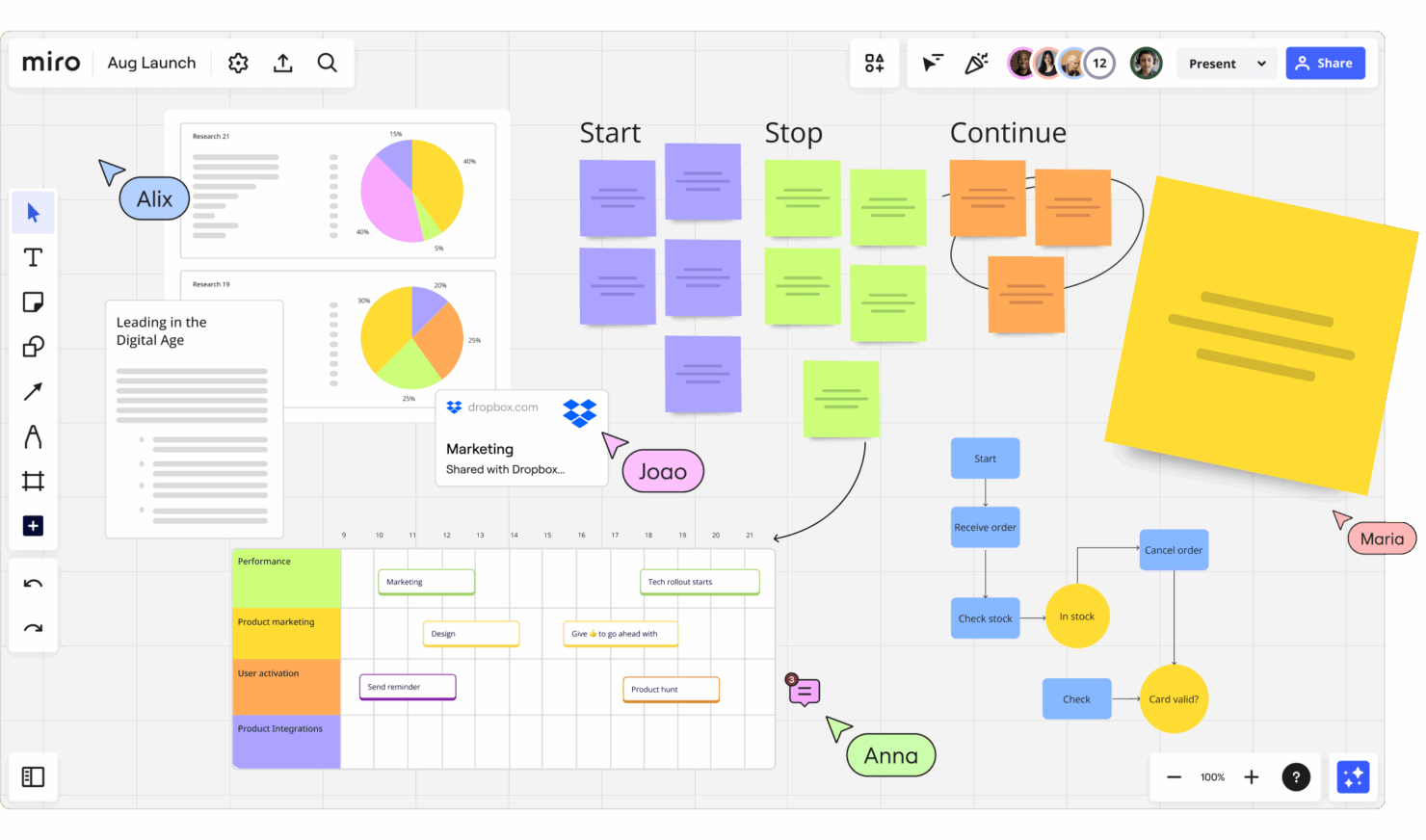
Essential sprint tools
Collaboration Platforms:
Miro
MURAL
Figma/FigJam
Prototyping Tools:
Figma
Keynote/PowerPoint
InVision
Adobe XD
AI Assistants:
ChatGPT for content, research synthesis, and analysis
Midjourney or DALL-E for quick visual concepts
Claude for detailed analysis and report generation
Miro AI for whiteboard assistance
User testing platforms:
Zoom or Google Meet for remote sessions
Lookback for recording and analysis
Gemini for meeting summaries
The future of design sprints beyond 2026
Several trends are shaping the future of design sprints:
Continuous discovery integration: Rather than one-off sprints, teams are adopting continuous discovery habits with sprint methodologies woven throughout.
AI facilitation: While human facilitators remain essential, AI is beginning to assist with facilitation tasks, documentation, and insight synthesis.
Strategic sprints: Shorter, focused sprints (1-2 days) for specific decisions or features, adapting the methodology to different scales.
Hybrid formats: Combining remote and in-person elements to leverage the benefits of both.
Industry specialization: Adaptations of the sprint methodology for specific industries (healthcare, finance, education) with domain-specific tools and practices.
Embracing Design Sprints in 2026
Design sprints have proven their value across thousands of organizations—from Google and Airbnb to enterprise giants like IBM and SAP. As we move through 2026, the methodology continues to evolve, incorporating AI capabilities while maintaining its core promise: helping teams solve big problems and test ideas quickly.
Whether you're a startup seeking product-market fit or an enterprise team navigating complex innovation challenges, design sprints offer a structured, efficient path forward. The key is to start—run your first sprint, learn from the experience, and adapt the methodology to your unique context.
Remember: innovation doesn't require months of planning and perfect conditions. With the right team, a clear challenge, and five dedicated days, you can fast-forward into the future and see what your customers actually need—before you build it.
The question isn't whether design sprints work. It's whether you're ready to sprint.