
How to facilitate your first design sprint with confidence
Written by Luke James Taylor, Design Sprint X Co-Founder
The whiteboard is covered in your meticulously planned agenda. Sticky notes, Sharpies, and voting dots are arranged precisely where they need to be. Your sprint team will arrive in ten minutes. Your heart races. You've read the book twice, watched every video, practiced the exercises—but can you really guide six people through five days of structured creativity to solve a critical business challenge?
Welcome to the universal experience of first-time Design Sprint facilitation. It's natural to feel nervous before and during the sprint as the facilitator, even for experienced facilitators. In this article, we’ll guide you through everything you need to know to facilitate your first Design Sprint with confidence, drawing directly from our experience after having run over 100 sprints across teams.
Understanding the unique confidence challenge of design sprints
Facilitating a Design Sprint isn’t just like running a workshop. You’re not just guiding discussion. You’re leading a tightly structured process that compresses months of debate, decision-making, and risk into four or five intense days. Teams clear their calendars. Senior stakeholders expect progress. The output shapes real product and business decisions.
The real challenge is that the facilitator’s role goes far beyond “keeping things on track”. In a sprint, you are responsible for protecting the process. From day one, you set the pace, the tone, and the boundaries. If you don’t actively lead, someone else will — usually the loudest voice in the room — and that’s how sprints quietly fall apart.
For first-time facilitators, this can feel intimidating, especially when you’re guiding people who are more senior, more experienced, or more opinionated than you. But confidence in a sprint doesn’t come from dominance or charisma. It comes from structure, clarity, and the ability to hold the process when the room gets uncomfortable.
And that’s exactly what we’ll help you build.
The design sprint learning curve: what first-time facilitators experience
Understanding the typical trajectory of skill development can normalise your experience and set realistic expectations. The first few repetitions give you the steepest, fastest learning curve—after just five sprints, facilitators are probably 85% as comfortable facilitating as they are after 200. This exponential learning curve means your confidence will grow rapidly with each sprint you facilitate.
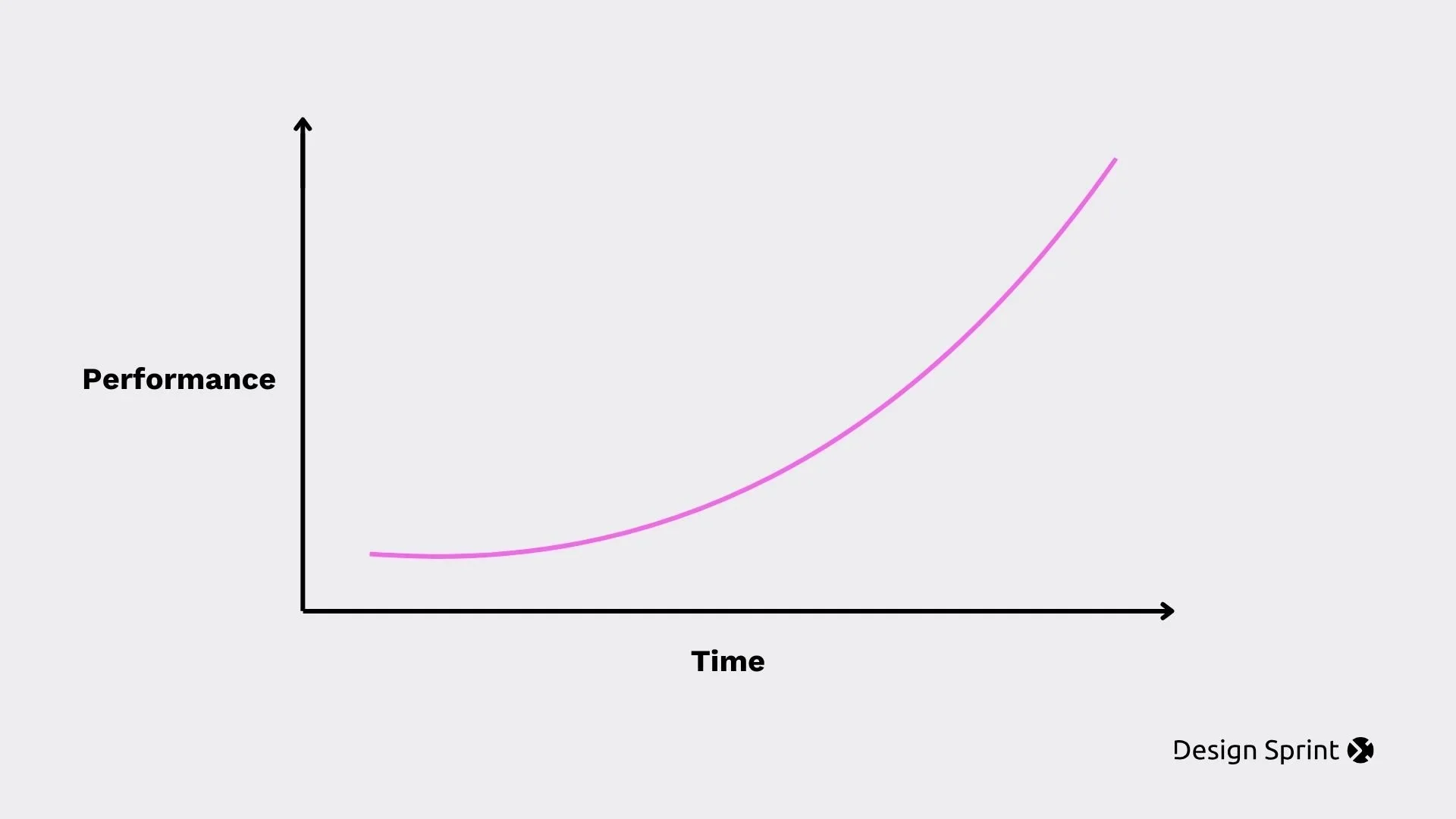
Learning curve
The learning happens on multiple fronts simultaneously: mastering the structured activities, managing time rigorously, reading group dynamics, maintaining neutrality, projecting confidence, and handling unexpected situations. That's precisely why the first sprint feels overwhelming as you're developing multiple competencies at once.
How to handle impostor syndrome
The impostor syndrome hits particularly hard in Design Sprint facilitation because you're often working with domain experts, senior decision-makers, and experienced designers who may know far more about the product or problem than you do. The voice in your head whispers: "Who am I to lead these people? What if someone challenges my authority? What if I can't answer their questions?"
Here's the critical reframe: Your job as a facilitator isn't to show off with your knowledge of the business; it's to drive people through a process that lands on a desired outcome. You're not expected to be the smartest person in the room about the product. You're expected to be the expert on the process. The team brings the content knowledge; you bring the facilitation expertise.
It's not on you to be the smartest person in the room. In fact, trying to be that person undermines your facilitation. When first-time facilitators stop putting pressure on themselves to have all the answers and instead focus on guiding the team through the structured process, everything shifts. Your authority comes not from domain expertise but from your mastery of the Design Sprint methodology and your commitment to serving the team's success.
7 strategies for building facilitator confidence
1. Master "the big 3" and follow the checklist
Design Sprint facilitation can feel overwhelming with its multitude of exercises, time constraints, and group dynamics to manage. At its core, facilitation is simple: you've got to ask questions to get information out in the open, write that information down and ask more questions to make sure you've written it down properly, and you've got to mind the clock and move through the steps.
When feeling overwhelmed, return to these fundamentals: ask, write, mind the clock. Even after facilitating numerous design sprints, experienced facilitators refer to the checklist in the book to remind them of the next steps. Create your own facilitator checklist that includes not just the exercises but also your preparation steps, materials needed, time blocks, and key phrases you'll use to transition between activities. This external structure supports your confidence by ensuring you won't forget critical elements even when nervous.
2. Prepare participants before the sprint begins
One significant source of facilitator anxiety is worrying about how participants will receive the process. Will they resist the exercises? Will they think it's silly? Will they trust your leadership? Sprints are much easier to facilitate when people know how the activities fit into the whole.
Send preparation materials the week before the sprint begins. Share the 90-second sprint video and a brief email explaining the process—both are fast and easily digestible. While it's not realistic to expect everyone to read the full book in advance, giving them context dramatically improves the sprint experience and reduces your facilitation burden.
On the first morning, before beginning, tell a quick story about what the sprint will be like. Explain the sprint overview, then tell the team you're going to facilitate, keep things on schedule, and move everyone from step to step. This explicit contracting about your role gives you permission to assert leadership throughout the week.
3. Control what is in your power: materials and environment
Before the sprint starts, physically walk the room. Move through it and deliberately place the materials in an organised way, so everything you need is always within reach.
When you know the room, you move with confidence. You’re not searching for materials, second-guessing where to stand, or breaking flow to solve avoidable problems. You look calm because the environment is working with you, not against you.
Have a clear materials checklist with exact items and quantities:
A5 notepads, black Sharpies (not regular markers), large and small sticky notes, voting dots in multiple colours, painter’s tape, timers or clocks, clipboards, and decent snacks. Bring backups if you can. Arrive early and set the room up the way you need it.
If you’re unsure what to include or want to save time, use the DSX materials list — we’ve put it together as an Amazon wishlist with the exact items we use and facilitate best with.
4. Use power poses and physical preparation
This might sound unconventional, but research on embodied cognition reveals powerful connections between physical posture and psychological confidence. Spending even two minutes in low-power poses noticeably lowers your confidence and increases cortisol (increasing stress), while the inverse is true for high-power poses.
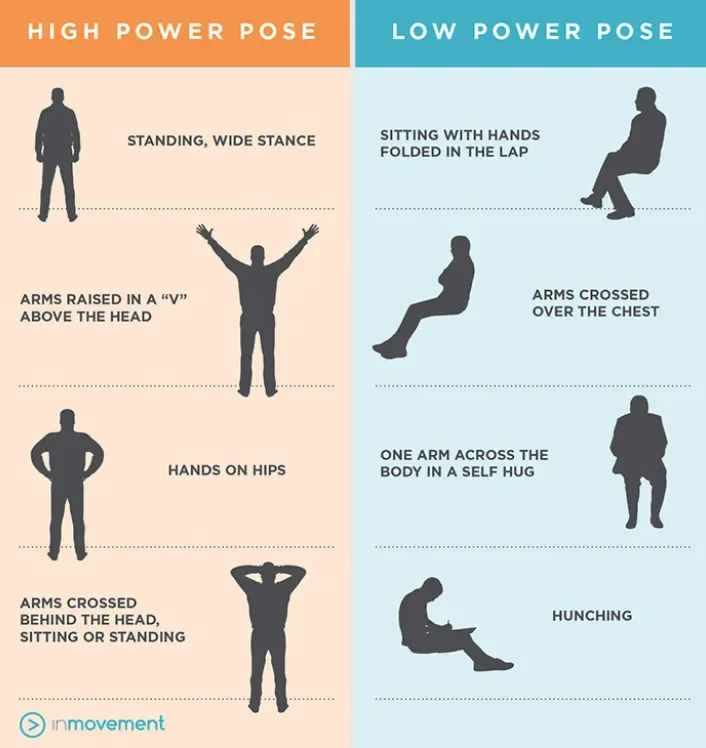
Additionally, take care of your (and your participant) physical needs throughout the sprint. Drink coffee and water, and don't make any session over 90 minutes without breaks. Managing energy through proper hydration, nutrition, and rest intervals enables you to show up as the energetic, focused facilitator your team needs.
5. Project confidence even when you don't feel it
Here's a facilitator truth that might surprise you: You will gain more confidence over time, but you should know it's natural to feel nervous in the first few sprints. This is all about fake it until you make it…
It's about recognizing that your internal experience doesn't need to match what you project. The team doesn't need you to be anxiety-free; they need you to trust the process enough to guide them through it. Be friendly but firm. It may feel uncomfortable at first, but people will welcome your leadership. Accept the workshop facilitator torch and take charge.
If something goes wrong or feels weird, feel free to blame the process, the book, or Jake Knapp—it's not you who says devices aren't allowed, it's the process; it's not you who says we have to do Crazy 8s, it's the book, but let's give it a shot. This technique allows you to enforce structure without taking personal responsibility for potentially unpopular rules.
6. Learn names and manage group dynamics proactively
Names matter more than most facilitators realise. Conversations flow better, authority feels more natural, and redirection lands more cleanly when you can call people by name.
There’s science behind this. Neuroscience research shows that hearing your own name activates attention-related areas of the brain more strongly than almost any other word — a phenomenon often referred to as the cocktail party effect. Even in noisy or distracting environments, people instinctively tune in when they hear their name. In practice, this means you can regain someone’s attention or bring them back into the group without raising your voice or escalating the situation.
At DSX when we facilitate a sprint, we always start with a simple exercise: everyone picks a name or nickname and shares the short story behind it. It breaks the ice without forcing energy, gives you an easy memory hook, and immediately humanises the room. We also use name stickers — every time. They reduce friction, help participants connect with each other faster, and make facilitation noticeably easier.
Design Sprints surface group dynamics quickly. Pressure, time constraints, and decision-making bring behaviours to the surface that would normally stay hidden. Your role as a facilitator is to spot these patterns early and address them before they derail the sprint.
If a discussion becomes circular or unproductive, it’s your responsibility to step in, refocus the group, and ask the decider to make a call. Facilitation isn’t about being polite. It’s about protecting momentum.
7. Facilitate early and often
The fastest way to build confidence is deliberate practice in progressively more challenging situations. The first few times you facilitate give you the steepest learning curve — which is why your goal should be simple: get to five facilitation reps as quickly as you reasonably can.
Those reps don’t all have to be full Design Sprints. Facilitate a team meeting. Run a half-day workshop. Support another team’s sprint. Anything that puts you in the facilitator role and forces you to lead a group through a structured process counts.
For your first sprint, consider these strategies to reduce pressure:
With good preparation, it's totally possible to facilitate a Design Sprint on your own, but you might also co-facilitate with someone more experienced for your first attempt
Choose a problem that's important but not mission-critical, reducing the stakes while you build skills
Facilitate for a friendly, supportive team that will be patient with minor missteps
Document your learnings after each sprint to accelerate improvement
Design Sprints make for an excellent learning opportunity, and every Sprint creates a new, unique learning outcome, as no two Sprints will be the same. Embrace this variability as part of the learning journey rather than seeing it as unpredictability to fear.
Common first-time facilitator mistakes and how to avoid them
Understanding common pitfalls helps you avoid them and builds confidence that you're prepared for likely challenges:
Mistake #1: Trying to act like a product strategist rather than a process guide
New facilitators are inclined to act like product strategists or senior designers—being persuasive and calling the shots on what decisions to take, but after many sprints, experienced facilitators learn that it's important to stay as neutral as possible. Your opinion on the product solution shouldn't influence outcomes. Stay focused on process!
Mistake #2: Not explaining why you're doing each exercise
Not explaining exercises in advance can leave teams feeling lost—the fast-paced workshops discourage people from raising concerns, so nobody speaks up. Take 30 seconds before each activity to explain what participants will do and why it matters to the overall sprint goal.
Mistake #3: Letting the sprint get off track
Design Sprints are about testing big ideas to help a product make a big leap, rather than incremental changes—there's always someone who thinks it's more important to solve immediate priorities rather than thinking long-term. As facilitator, you protect the sprint's focus by redirecting these conversations. Remind the team of the sprint question and long-term goal.
Mistake #4: Not managing time rigorously
Time management is perhaps the facilitator's most critical responsibility. Timing is vital, a good facilitator knows when to provide confidence and support to keep a team on track, and when to stay out of the way. Use visible timers. Give time warnings. Cut discussions when necessary.
Mistake #5: Forgetting to have fun
Running a design sprint is hard work, no question about it, but it should also be fun. If you can, laugh at yourself. To experienced facilitators, it's the absolute best of work: a challenging problem, focused time, a team of people working together and bringing their best, disagreeing constructively, and making progress. Your positive energy influences the team.
Practical preparation for your first design sprint
One of the biggest confidence killers for first-time facilitators isn’t the sprint itself, it’s everything that happens before it starts.
At DSX, we use a single Sprint Preparation document for every sprint we run. It’s the document we rely on internally and send to clients ahead of time to make sure everyone is aligned, prepared, and ready before day one.
We’ve now made this guide freely available so anyone facilitating a Design Sprint — especially for the first time — can start from the same place we do.
The guide covers everything you need to fuel, organise, and equip your team for a smooth, productive sprint. From a snack list to a full list of materials you’ll need on the day.

Sprint preparation document
The long-term journey: growing as a facilitator
Your first sprint isn’t the finish line. It’s the start of how you grow as a facilitator.
As you run more sprints, you begin to see patterns: where teams tend to get stuck, how decisions derail, how group dynamics shift under pressure. Over time, facilitation stops being something you do and becomes a capability you can apply far beyond Design Sprints, in problem framing, stakeholder alignment, and decision-making sessions across the organisation.
At Design Sprint X, we’ve built an online Design Sprint course with three tiers, each designed for a different level of participation and responsibility in a sprint. Whether you’re contributing as a team member, supporting facilitation, or leading sprints end to end, each tier builds the skills required at that level.
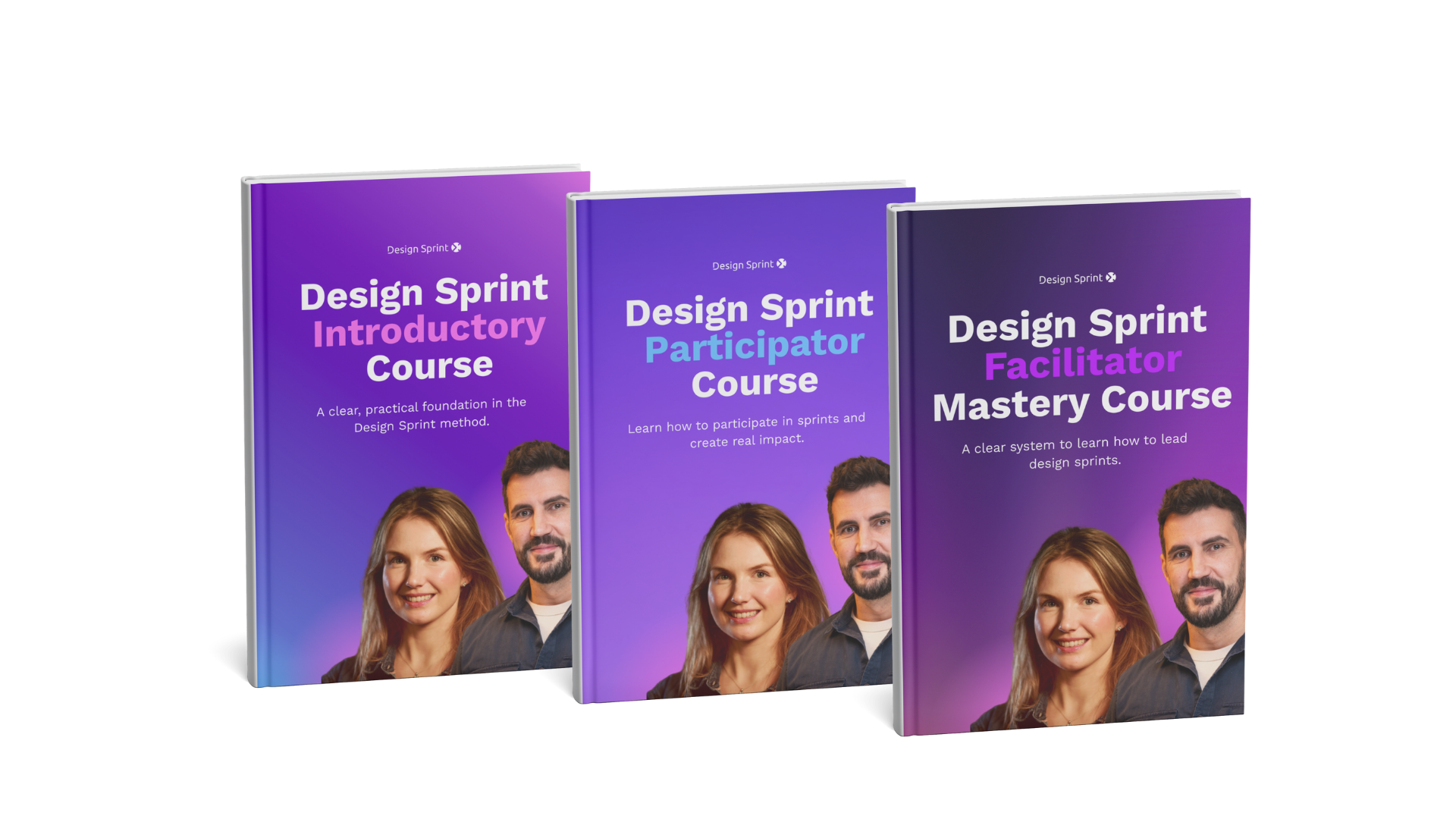
For those who want to go deeper, Ultra-Violet is our advanced tier focused on the mastery of Design Sprint facilitation. It’s designed for people who want to confidently lead sprints, handle edge cases, manage senior stakeholders, and hold the process under real organisational pressure.
Formal training isn’t a prerequisite to facilitating your first sprint. But structured learning dramatically shortens the confidence curve. It gives you frameworks for the moments that aren’t covered in the book, exposure to real-world facilitation scenarios, and a clearer understanding of why the process works.
Beyond training, growth also comes from community. Connecting with other facilitators, sharing experiences, and learning how others handle difficult situations is one of the fastest ways to improve.
Facilitation mastery isn’t about perfection. It’s about repetition, reflection, and continuing to sharpen the way you lead people through uncertainty toward decisions that stick.
You're more ready than you think
As you stand at the threshold of your first Design Sprint facilitation, remember that every expert facilitator stood exactly where you are now. They felt the same nervousness, harbored the same doubts, and wondered whether they were truly qualified. The difference between them and aspiring facilitators isn't innate talent or exceptional confidence, it's simply that they started despite uncertainty and persisted through discomfort.
In your life, there will only be a certain number of moments like a Design Sprint—savor it. Despite the stress and challenge, this is meaningful work: bringing together smart people to solve important problems, creating space for creativity within structure, and compressing months of typical work into a focused week that delivers validated learning.
You have prepared. You have the checklist. You have the structured process. You have the materials. Now you need just one more thing: the courage to begin.
Your facilitation journey—and the confidence that comes with it—begins with your first sprint. The team waiting for your facilitation needs what you can offer: your commitment to their success, your trust in the process, and your willingness to guide them through a transformative week of focused innovation.
Your first Design Sprint awaits.