
The AI layoff trap: why cutting teams makes your biggest problems worse
Written by Luke James Taylor, Design Sprint X Co-Founder
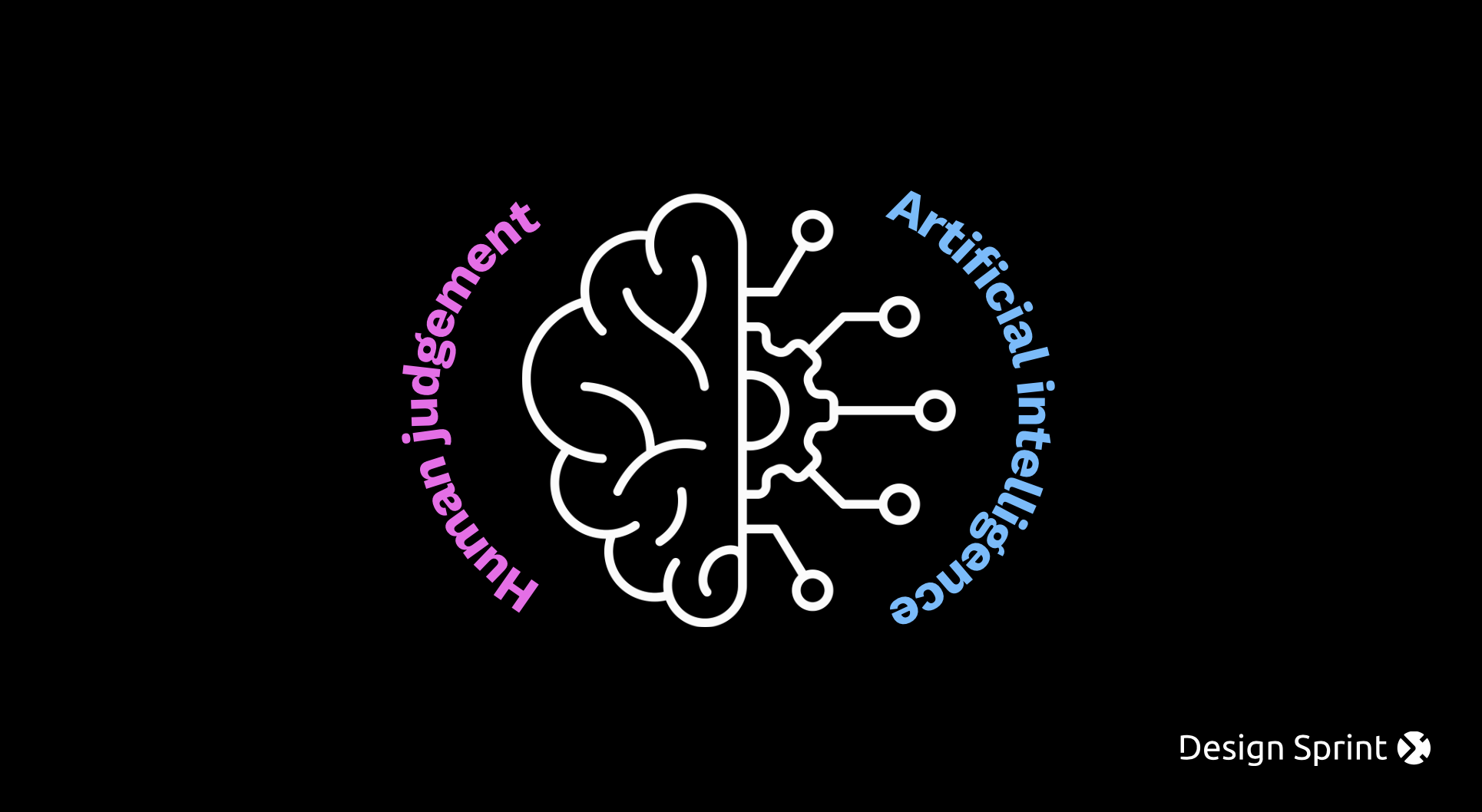
In February 2026, Block CEO Jack Dorsey cut 4,000 jobs — 40% of his entire company — and said AI tools meant smaller teams could do more. Two weeks later, Atlassian cut 1,600 roles to become an “AI-first company.” Meta is reportedly planning its biggest layoff since 2022, with cuts that could affect over 15,000 people, partly to offset the cost of AI infrastructure.
The message from the C-suite is clear: AI makes teams smaller. Smaller is better. Fewer people, more output.
We think this is one of the most dangerous ideas in enterprise right now.
What AI is actually good at
Let’s be honest about what AI does well, because it does a lot well.
AI is extraordinary at execution. It writes code faster. It summarises documents in seconds. It generates first drafts, analyses data sets, automates repetitive tasks. If your bottleneck is throughput, getting known work done faster, AI is a genuine game-changer.
Nobody serious is arguing against using AI. We use it. Our clients use it. It makes teams more productive.
But there’s a difference between making teams more productive and making teams smaller. And that difference matters enormously when the work in front of you is complex, ambiguous, and high-stakes.
The problem AI can’t solve
Here’s what AI can’t do: it can’t sit in a room with your head of product, your lead engineer, your marketing director, and a customer-facing team member and figure out why your onboarding flow is failing.
It can’t navigate the politics between two departments that disagree on strategy. It can’t read the room when a senior stakeholder is nodding along but quietly uncommitted. It can’t broker a decision between five competing priorities when the data is ambiguous and the stakes are real.
These are collaboration problems. They require diverse perspectives, human judgment, and structured decision-making. They’re the problems that actually determine whether your product succeeds or fails, whether your strategy lands or stalls, whether your team ships something that matters or spends another quarter circling.
And they’re the problems that get worse, not better, when you cut teams.
The evidence is already coming in
This isn’t theoretical. The evidence is arriving in real time.
Block is the most telling case. In February 2026, Jack Dorsey cut over 4,000 people — 40% of the company — and told shareholders that a “significantly smaller team, using the tools we’re building, can do more and do it better.” It was framed as the future of work. Investors sent the stock up 22%.
Within weeks, Block started quietly rehiring people it had just fired.
A design engineer was told his layoff had been a “clerical error” and was invited back four days later. A recruiter was rehired after his manager advocated all the way up to the CEO. And a technical lead for Square Online, Richard Hesse, found himself as the only person left on his entire team. He had to threaten to leave before leadership agreed to rehire some of his colleagues. His words on LinkedIn: “Block’s unprecedented layoffs this week have shown me that the company does not possess the same levels of loyalty that I do.”
This is what happens when you cut teams based on a theoretical future rather than an operational reality. You lose people you need, break teams that were working, and then scramble to reverse the damage.
Block isn’t alone. Klarna replaced 700 customer service employees with AI. Quality collapsed. Customers complained. Humans had to be brought back. Forrester’s 2026 predictions report found that 55% of employers already regret laying off workers for AI — and predicts that half of AI-attributed layoffs will be quietly reversed, with roles rehired offshore or at lower salaries.
Even Sam Altman, the CEO of OpenAI, has called much of this trend “AI-washing” — companies using AI as a convenient narrative for cuts that are really about cost reduction, over-hiring corrections, or shareholder pressure.
This isn’t an AI revolution. It’s a cost-cutting cycle dressed up in new language. And the people paying the price are the teams that were actually solving the hard problems.
The real cost of cutting teams
When you reduce headcount, you don’t just lose output. You lose perspective.
Complex problems — the ones that determine product strategy, customer experience, and competitive positioning, need multiple viewpoints to solve well. That’s not a feel-good statement about inclusivity. It’s a practical reality about how good decisions get made.
When a product team loses its customer success representative, nobody in the room knows what users are actually struggling with. When an innovation team loses its engineering lead, ideas stop being grounded in feasibility. When a strategy team gets trimmed to three people, the remaining three develop blind spots that nobody challenges.
We see this constantly in our work. The teams that produce the best outcomes in a Design Sprint are the ones with the right mix of perspectives in the room: product, design, engineering, customer insight, and a senior decision-maker. Remove any one of those voices and the output suffers. Not because any individual is irreplaceable, but because the diversity of thinking is.
AI makes individuals faster. Structure makes teams smarter.
Here’s the nuance that’s getting lost in the AI hype cycle.
AI makes individuals more productive. That’s real and valuable. A 3-person team with AI tools can produce what a 12-person team produced without them. But production is not the same as problem-solving. Output is not the same as insight. Speed is not the same as direction.
Anthropic’s own research on how AI is transforming work inside their company found something telling. Engineers reported that AI handles 80% of the routine questions they used to ask colleagues. But they were clear: the remaining 20% — the complex, contextual, strategic conversations — is crucial. That’s where the real work happens.
The question enterprise leaders should be asking isn’t “how many people can we cut?” It’s “how do we give our smaller, AI-augmented teams the structure to collaborate better on the hard problems?”
Because that’s where the gap is. AI has made execution faster. But nobody has made collaboration faster. If anything, the acceleration has made alignment harder. When everyone’s moving at twice the speed, the cost of going in the wrong direction doubles too.
What actually works: structured collaboration
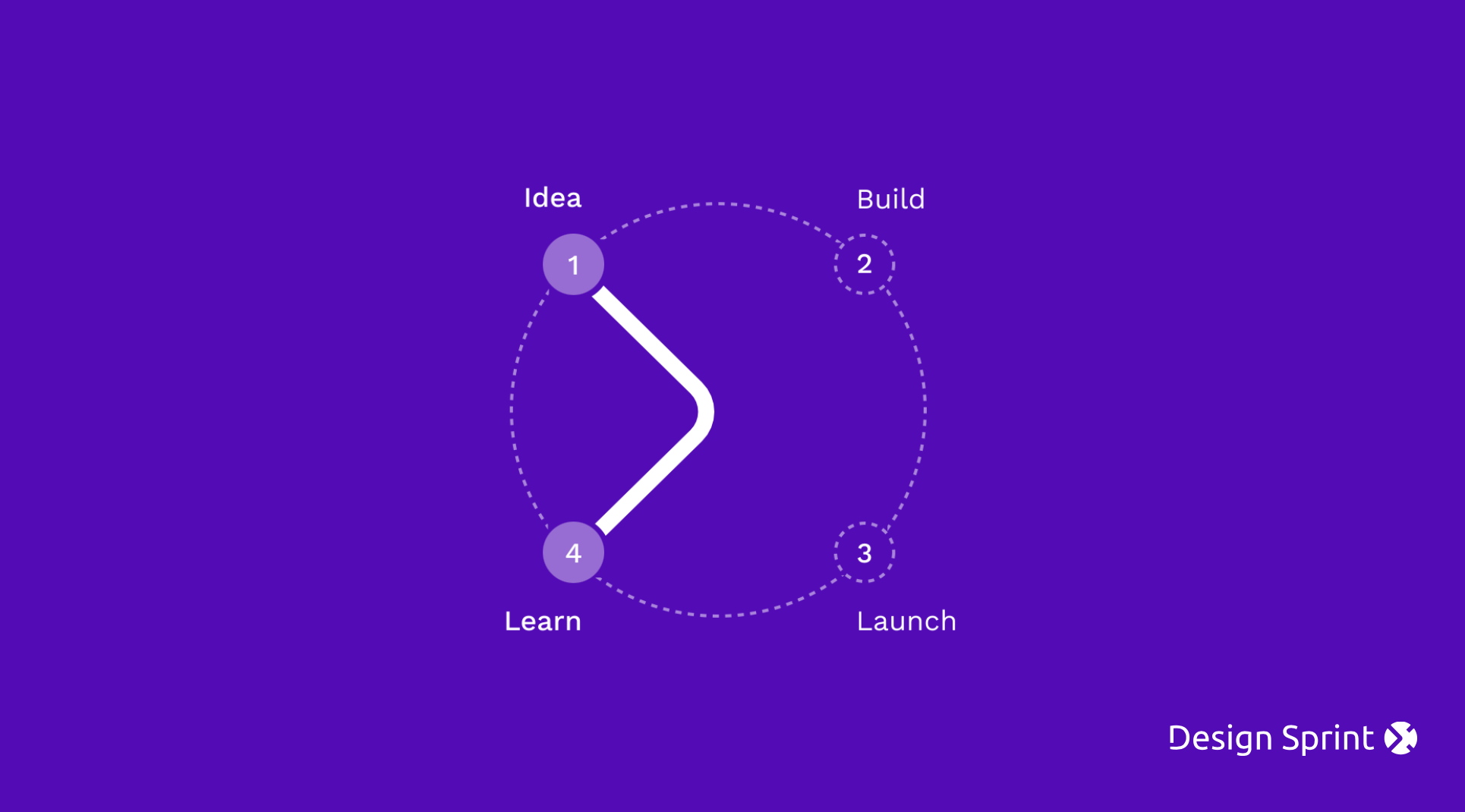
A Design Sprint is a five-day structured process that takes a cross-functional team from a complex problem to a tested prototype. It’s a rigorous framework for making decisions, building something tangible, and testing it with real users — all in days.
The process is deliberately designed to do the things AI can’t:
• Get alignment on the real problem before anyone jumps to solutions
• Force individual thinking to prevent groupthink and HiPPO dominance
• Make decisions in hours through structured voting, not weeks of committee review
• Build a realistic prototype in a single day
• Test with real users and get evidence, not opinions
We’ve run sprints at BP, British Gas, Gen Digital, Sky Betting, Molson Coors and others... In every case, the value came from getting the right people together with the right structure. Not from having more people. Not from having fewer people. From having the right people, collaborating well.
AI could never have produced what those teams produced. Not because AI isn’t powerful — it is. But because the problems were ambiguous, the stakes were high, and the solutions required human judgment, diverse perspectives, and real-world testing.
The smart play for enterprise leaders
If you’re an enterprise leader reading this in 2026, here’s what we’d actually recommend:
Use AI to accelerate execution.
Automate the repetitive stuff. Give your teams better tools. Let AI handle the 80% of routine work it’s genuinely good at.
Invest in your team’s ability to collaborate on the other 20%.
The complex, ambiguous, high-stakes problems that determine whether your product wins or loses — those need structure, not software. Train your teams to run Design Sprints. Give them a framework for making decisions fast with evidence.
Don’t confuse efficiency with effectiveness.
A smaller team that’s moving fast in the wrong direction is worse than a slightly larger team that took a week to validate the right direction. Speed without alignment is just expensive chaos.
The companies that will win in the next five years aren’t the ones with the fewest people. They’re the ones whose teams can solve the hardest problems fastest. That requires AI for execution and structured collaboration for direction.
You need both. And right now, almost everyone is investing in the first and ignoring the second.
Conclusion
AI is a brilliant tool. It makes individuals faster, teams more productive, and routine work disappear. We’re not against it. We use it every day.
But AI cannot replace the thing that actually solves complex problems: getting the right people in a room with the right structure and making a decision based on evidence.
Companies that cut teams in the name of AI are making the same mistake they made with endless meetings, confusing activity with progress. Fewer people in more meetings isn’t the answer. Fewer meetings with better structure is.
The AI layoff trap is real. Forrester says half of these cuts will be reversed. The question is whether your organisation falls into the trap or builds something smarter.
“Nobody knows everything. But together, we know a lot.”
That’s always been true. It’s more true now than ever.
FREE diagnostic
💡
FREE diagnostic 💡
FREE DIAGNOSTIC
How healthy is your team’s collaboration?
8 questions. 2 minutes. Find out where your team excels at working together — and where you’re leaving value on the table. Free, no email required.