
Design thinking workshop vs design sprint: same principles, better results
Written by Luke James Taylor, Design Sprint X Co-Founder
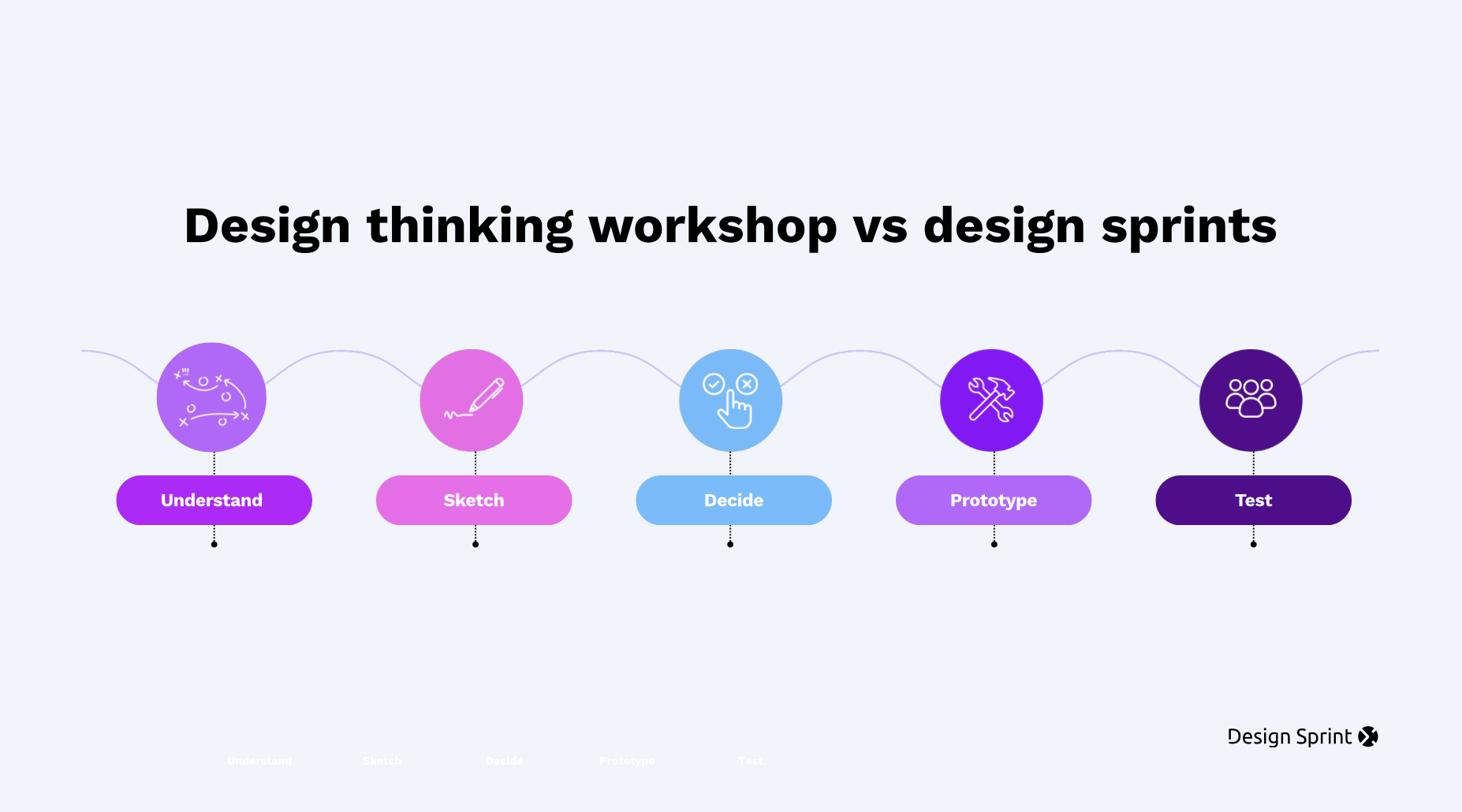
If you’re looking into design thinking workshops, you already believe in the right things. Empathise with users. Define real problems. Generate ideas. Prototype. Test. That’s a solid philosophy, and it’s been around since the 1960s for good reason.
The question isn’t whether design thinking works. It does. The question is: what’s the best way to implement it with your team so you actually get results?
That’s where Design Sprints come in. A Design Sprint isn’t an alternative to design thinking — it’s design thinking with structure, deadlines, and teeth. Same philosophy. Better vehicle.
What design thinking and design sprints have in common
More than most people realise. The core principles are identical:
• Start with empathy: understand the user and the real problem before generating solutions
• Cross-functional collaboration: bring diverse perspectives into the room
• Ideation: generate multiple possible solutions, not just the first one
• Prototyping: make ideas tangible before committing to building them
• Testing: validate with real users, not assumptions
A Design Sprint didn’t come out of nowhere. Jake Knapp built it at Google Ventures by taking the best principles of design thinking and packaging them into a structured five-day process. It’s design thinking made operational.
Where they differ: implementation
The principles are the same. The implementation is where things diverge and where the results change dramatically.
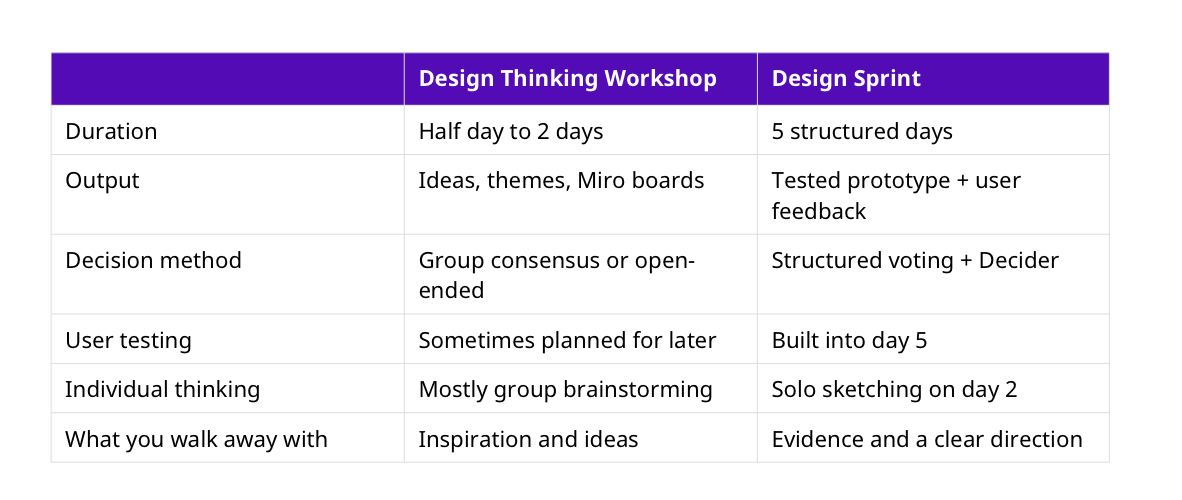
The 3 things a sprint adds to design thinking
1. Structure for decisions
Design thinking is excellent at divergent thinking — opening up possibilities, generating options, exploring the problem space. But most design thinking workshops struggle with convergent thinking, actually choosing a direction and committing to it.
A Design Sprint solves this with a structured voting process and a designated Decider. By Wednesday afternoon, the team has chosen one direction. Not by committee. Not by the loudest voice. Through a transparent, evidence-based process that takes hours, not weeks.
2. A Real prototype
The prototype stage in design thinking often gets deferred. “We’ll prototype after the workshop.” In practice, “after the workshop” turns into three months of scheduling meetings and losing momentum.
In a sprint, the prototype gets built on Thursday. One day. It doesn’t need to be production-ready, it needs to be realistic enough that a user can interact with it honestly. This is where ideas become tangible, and tangible ideas are the only kind worth testing.
3. User testing before you build
This is the biggest difference. The whole point of design thinking is to be user-centred. But most design thinking workshops end before anyone talks to a real user. The ideas stay theoretical.
A Design Sprint puts the prototype in front of five real users on Friday. By late afternoon, patterns are clear. The team has evidence about what works, what breaks, and what to do next. That evidence is worth more than a hundred sticky notes.
They’re not competing tools. They’re different tools for different moments.
A design thinking workshop is great when: you’re in early-stage exploration, building team alignment, gathering diverse perspectives, or trying to understand a problem space before committing to a direction. It’s open-ended by design, and that’s its strength when you need breadth.
A Design Sprint is great when: you have a specific challenge to solve, a decision to make, or an idea to validate. It’s structured by design, and that’s its strength when you need depth and a result.
In fact, some of the best sprint outcomes we’ve seen start with a design thinking workshop. The workshop opens the space. The sprint closes it. One explores. The other resolves.
How to get started
If your team already values design thinking, you’re halfway there. The principles are right. The next step is applying them in a way that produces tested, evidence-based outcomes.
Bring in a facilitator
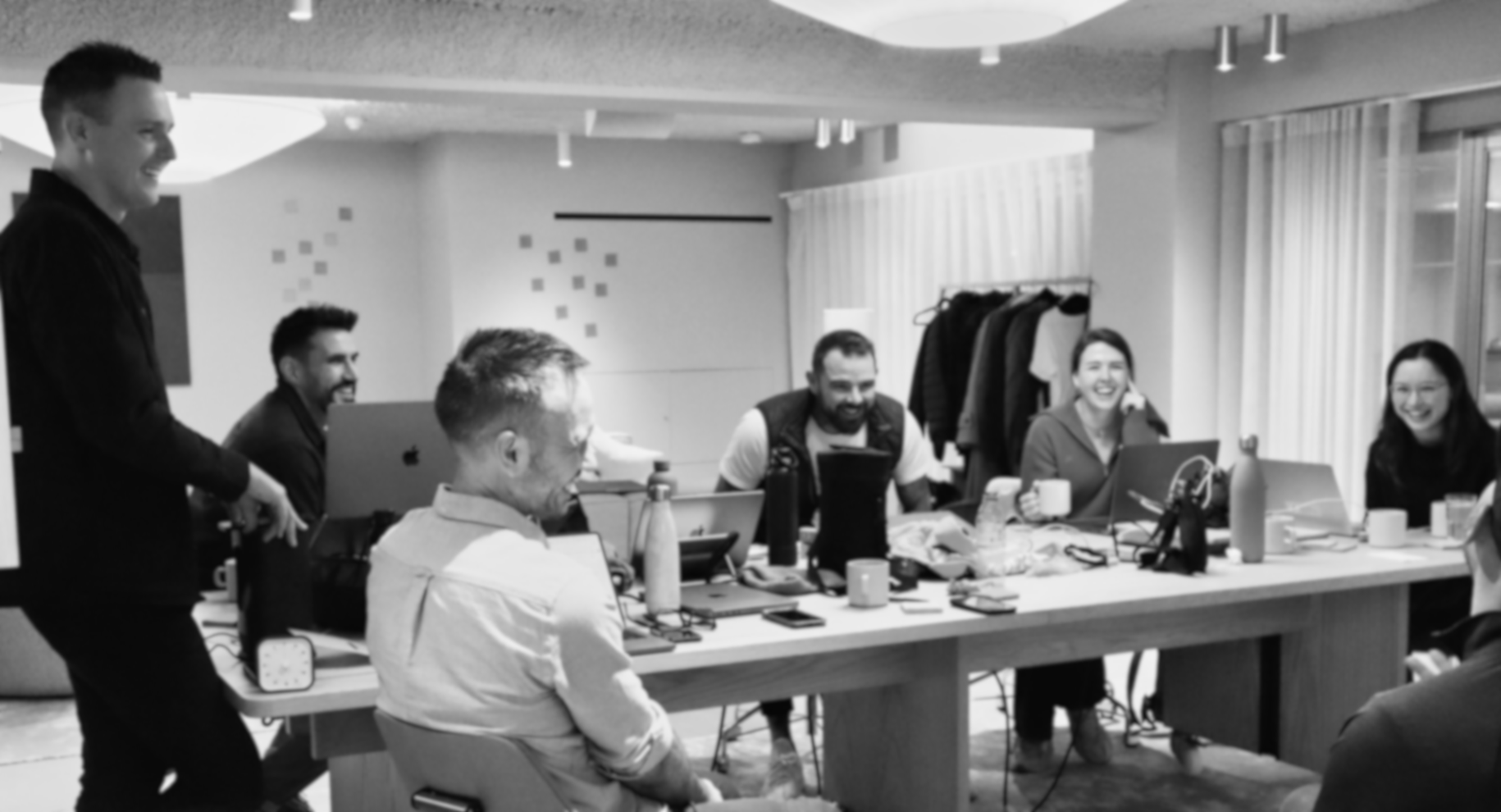
If you’ve got a high-stakes challenge and want to see what a sprint can do, an experienced facilitator can run the process while your team focuses on the problem. We do this for enterprise teams across the world, check on our facilitation page below.
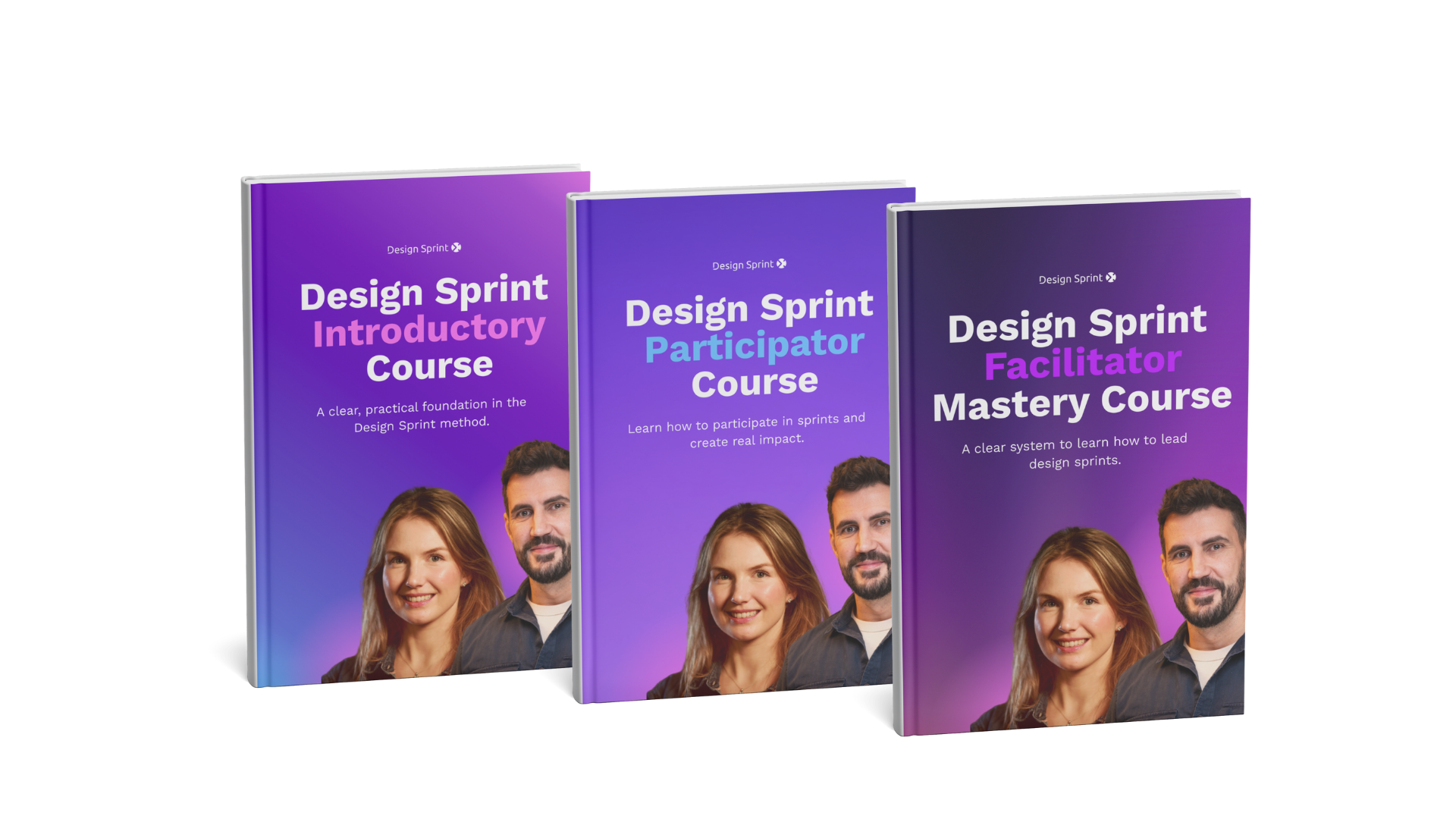
Train your team to run sprints.
If you want to build the capability in-house so your teams can run sprints independently, invest in training. The organisations that get the most from this method are the ones where multiple people can confidently facilitate. We offer training for exactly this, more details on our training page.
The Bottom Line
Design thinking and Design Sprints aren’t rivals. They share the same DNA — empathy, ideation, prototyping, testing. The difference is that a Design Sprint puts a structure and a deadline around those principles, so you walk away with evidence instead of ideas.
If you’re looking for a design thinking workshop, you’re looking for the right thing. A Design Sprint is the most structured, reliable way to get there, in five days, with tested results.
Want to see what a sprint could do for your team?