Why good ideas don’t ship, and the fix
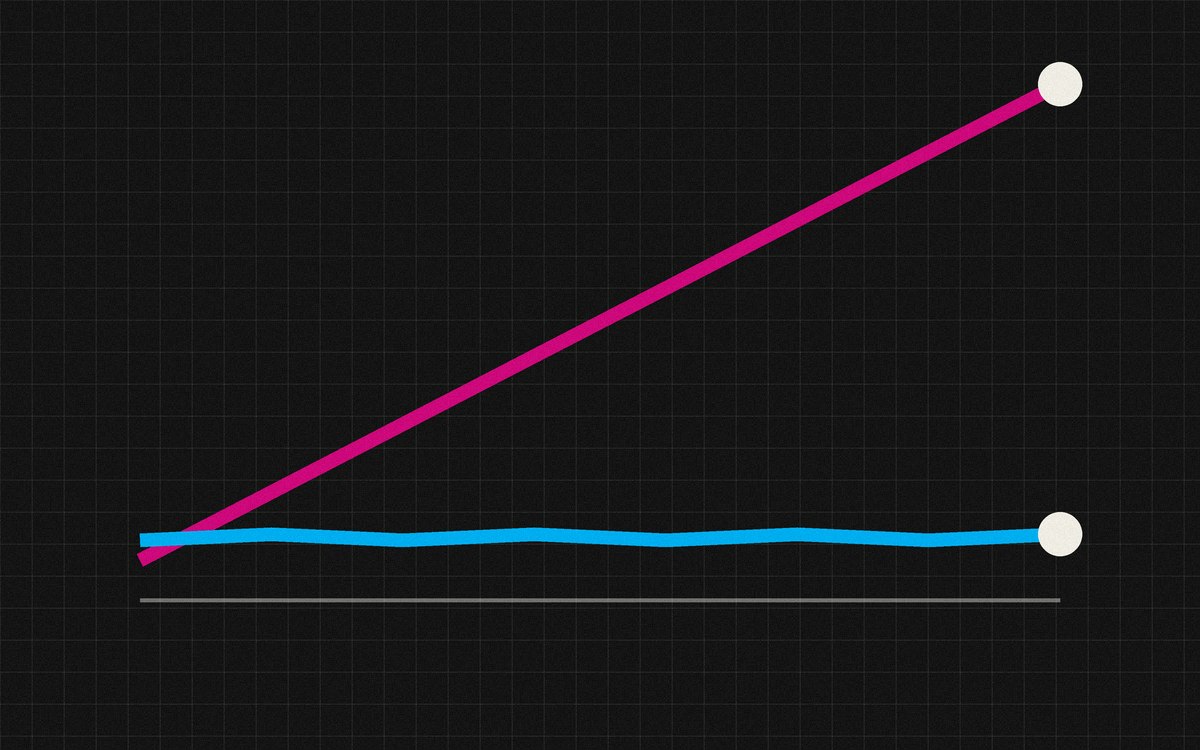
Only 12% of teams almost always ship what their design sessions produce. The data says the problem is not the ideas — it is everything that happens after them.

Every team has an ideas graveyard. The shared drive full of decks, the wall of photographed sticky notes, the “great session” everyone left buzzing about that came to nothing. The instinct, standing in that graveyard, is to blame the ideas — or the people who had them.
The data says that instinct is almost entirely wrong. Good ideas die after they are born, in the handoff between deciding something and doing it.
Why do good ideas fail?
Because organisations are far better at generating ideas than shipping them, and they rarely notice the difference until it is too late. The numbers are consistent across fields:
- In our State of Design Thinking 2026 survey, only 12% of teams almost always ship what their design sessions produce. Half ship from 50% or fewer of their sessions.
- Harvard Business Review research finds 67% of well-formulated strategies fail due to poor execution.
- Roughly 70% of strategic initiatives fail because of weak execution, not weak intent.
- Organisations lose close to 40% of a strategy’s value to execution failures.
Different disciplines, same verdict: the bottleneck is downstream of the idea. We have an abundance of ideas and a scarcity of follow-through.
The anatomy of an idea that died
The pattern is almost always the same. A team identifies a real problem. They run a workshop. The energy is good, a direction emerges, everyone nods. The session ends with a photo of the board and a vague sense that “we’re aligned now.”
Then Monday comes. Everyone goes back to their actual backlogs. No single person was given the decision to carry. There is no record of what was decided, only artefacts of what was discussed. There is no date. The one stakeholder who could have unblocked it was not in the room. Three weeks later someone asks “whatever happened to that thing?” and nobody can quite say.
No step in that story is a failure of creativity. Every step is a failure of the system around the idea.
The five things that actually block ideas
We asked 100 practitioners what stops ideas becoming outcomes. Every one of the top five blockers is about the system, not the work:
- Stakeholder sprawl — 54%. Too many people with a say, none with the call.
- Departmental misalignment — 52%. Teams pulling in different directions across the handoff.
- No time to execute — 43%. The decision is made, but no capacity is cleared to act on it.
- No ownership after the workshop — 40%. Nobody’s name is on it.
- No executive buy-in — 31%. No air cover, so it dies the first time it meets resistance.
Idea quality ranks seventh, blamed by just 20%. Poor facilitation is last at 14%.
The four gaps where ideas die
- The alignment gap. Different people leave with different understandings of what was decided. Fix: a written decision, not a remembered one.
- The ownership gap. No single accountable person carries the work forward. Fix: one named owner per decision.
- The authority gap. The people who can approve or resource the work were not in the room. Fix: real decision-makers present and on the hook.
- The capacity gap. The decision is made but no time is cleared, so it loses to whatever is already on fire. Fix: a date and a protected first action.
Most dead ideas died in two or more of these at once. You do not need to fix all four. Closing any of them lifts your shipping rate.
Why measuring outputs makes it worse
When success is defined as “we generated lots of ideas” or “everyone left aligned,” people optimise for volume and good feelings. Both are easy to produce and neither requires anything to ship.
The fix is a single change of metric: track the percentage of sessions that reach customers. It is uncomfortable at first, because the number is usually low. But the moment a team starts watching its shipping rate, the conversation in the room changes.
How to close the gap
- Name an owner. Every decision leaves the room with one person’s name on it. Shared ownership is no ownership.
- Log the decision. Two minutes of writing beats a photo of the whiteboard, because it captures intent rather than artefacts.
- Put a date on it. A decision without a deadline is a wish.
- Get the deciders in the room. Without real authority present, you are generating options for someone to veto later.
- Measure outcomes, not outputs. Track what shipped, and kill the rituals that do not earn their place.
A team that has closed the gap does not run more sessions or have better ideas. It runs sessions that end differently: a decision written down, one owner named, a date set, a clear first action. None of it is clever. All of it is usually skipped.